
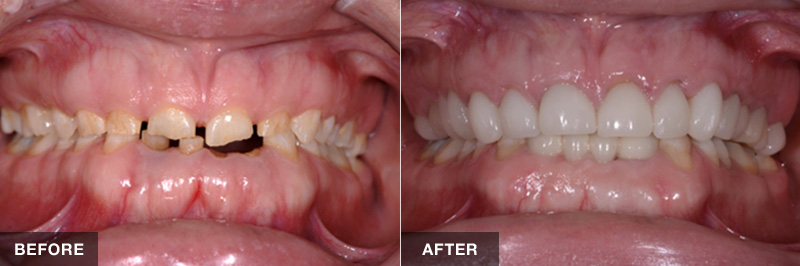
By Karun Dewan, Restorative Consultant Specialist in Prosthodontist, Periodontist & Endodontist
Pathological, non-carious loss of tooth tissue is an increasing problem to the dental profession, with young individuals especially at risk. The management of tooth surface loss (TSL) demands a full understanding of its aetiology and presentation. Non-carious loss of tooth tissue is a normal physiological process and occurs throughout life. If the rate of loss is likely to prejudice the survival of the teeth, or is a source of concern to the patient, then it may be considered ‘pathological’ and restorative intervention may be required early.
Traditionally, the terms ‘erosion’, ‘abrasion’ and ‘attrition’ have been used to describe the non-carious, pathological loss of tooth tissue.
Often the wear is multifactorial and misdiagnosed. Correct diagnosis and early treatment strategy are required otherwise the prognosis of the teeth becomes poorer with severe cases. Complex treatment could be avoided with robust treatment plan.
Restorative treatment is indicated when stabilisation techniques have failed to resolve the patient’s dental problems. It is a widely-held view that restorative treatment in the presence of ongoing wear is unwise. Nevertheless, there are occasions when control proves impossible and, to preserve the teeth, restoration becomes essential. The patients should be aware of both the advantages and disadvantages of any proposed treatment. Restoration should be based on protecting and conservation of remaining tooth structure, Resolution of pulpal sensitivity/pain and Improvement in appearance.
 Severe Tooth Wear due to Attrition (physical wear)
 Tooth Surface Loss due to erosion (acid regurgitation)
 Tooth Wear due to Aggressive Tooth Brushing Trauma (Abrasion)